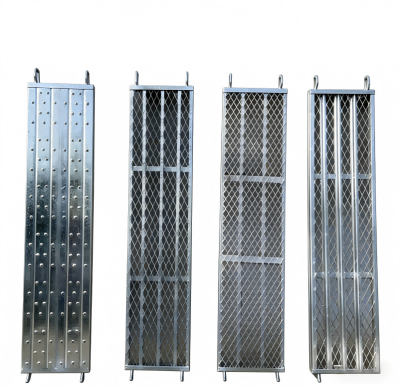
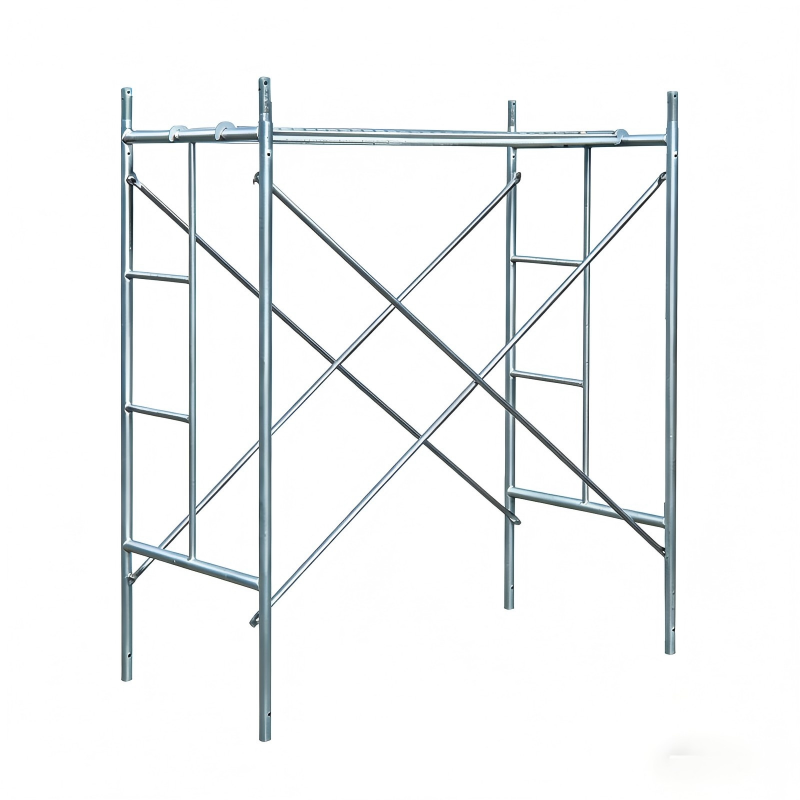
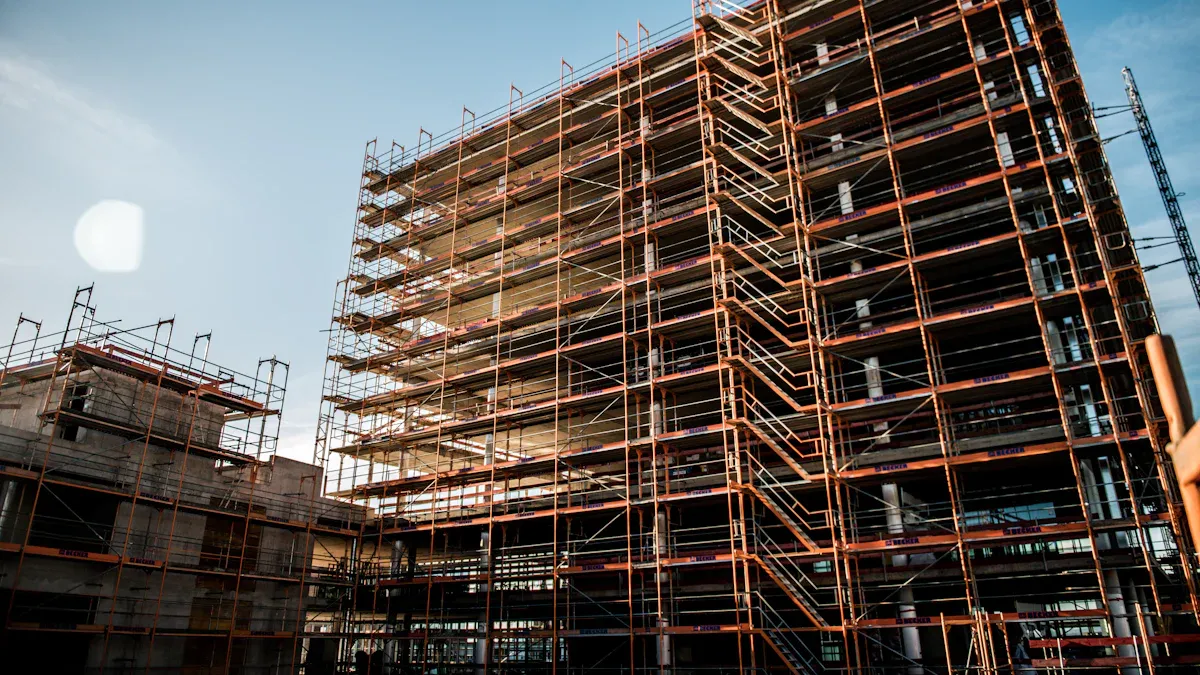
Frame Scaffolding is also called tubular welded scaffolding. It gives workers a safe and strong place to stand when working high up. You can see it on many building sites in 2026. More people use it now for a few reasons:
Cities are growing fast, so more tall buildings are built.
Safety rules are stricter, so companies want safer scaffolding.
New tools, like modular systems and computer-aided design, help set up scaffolding faster and safer.
Always pay attention to new rules and good ways to do your work.
Key Takeaways
Frame Scaffolding gives workers a safe and strong place to stand. It is very important for building sites.
Always check if the scaffolding is steady before you use it. This helps stop accidents and keeps everyone safe.
Pick the right kind of Frame Scaffolding for your project. Think about how tall it needs to be and how much space you have.
Follow OSHA and ANSI safety rules to keep your worksite safe. This also helps you follow the law.
Check and fix your scaffolding often to make it last longer. This also makes sure it stays safe to use.
Use the modular design of Frame Scaffolding to fit different jobs. This can help you work better and faster.
Buy good scaffolding from companies you trust. This makes sure it will last and keep workers safe.
Teach your team how to use scaffolding the right way. Training helps stop accidents and keeps everyone safe.
1. What Is Frame Scaffolding
Definition and Purpose
Temporary Structure
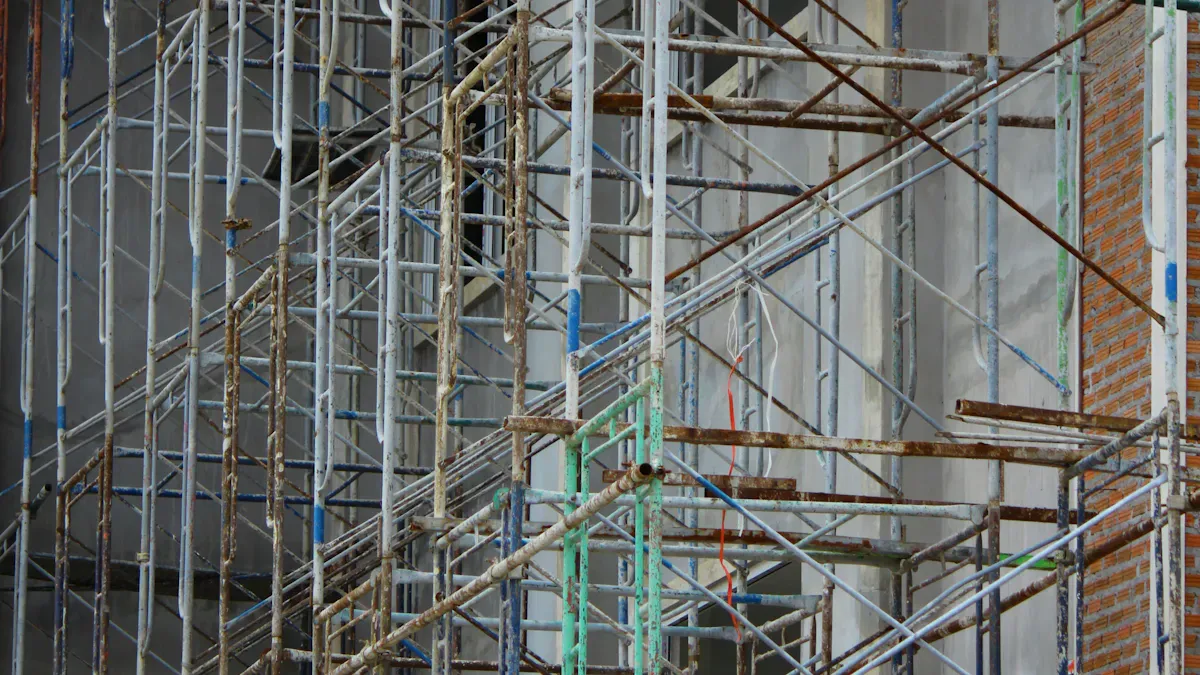
Frame Scaffolding is a structure you use for a short time. It helps you reach high spots when building, fixing, or cleaning things. You can put it together and take it apart fast. This makes it good for jobs that need to move quickly.
Support for Workers and Materials
Frame Scaffolding holds workers and materials. It gives you a safe place to stand and move tools or supplies up high. This structure also keeps you safer from falling or getting hurt.
Tip: Always make sure the scaffolding is steady before you start working.
Here is a table that shows why people use Frame Scaffolding in building today:
Purpose | Description |
|---|---|
Access | Gives workers a safe way to get to high places. |
Support | Holds workers and materials while building. |
Protection | Keeps workers safe from falls and other dangers. |
You will see Frame Scaffolding used for many jobs like:
Painting and outside work
Fixing and taking care of buildings
Putting in windows, walls, and other outside parts
Building tall buildings with many floors
Structure and Materials
Steel and Aluminum Tubes
Most Frame Scaffolding uses steel or aluminum tubes. Steel is strong, lasts a long time, and does not rust easily. Aluminum is light, easy to carry, and still holds heavy things. Both help you build a safe and steady platform.
Material | Advantages |
|---|---|
Steel | Strong, lasts long, does not rust easily. |
Aluminum | Light, easy to move, holds heavy things, does not rust. |
Vertical and Horizontal Framework
The structure has tubes that go up and across. These tubes connect to make a strong frame. You can build the scaffolding as tall or wide as you need. You can also add or take away parts because it is modular.
Key Components
Frames
Frames are like the bones of the scaffolding. You use them to make the main up-and-down and side-to-side supports.
Cross Braces
Cross braces go across and make the scaffolding stronger. They stop it from moving or shaking.
Platforms
Platforms are flat parts you stand on and put things on. They must be strong and safe.
Connectors
Connectors join the frames and braces together. They make sure all the parts fit tight and safe.
Here is a quick look at how these parts work together:
Component | Description |
|---|---|
Frames | The main part of the scaffolding, with up-and-down and side pieces to hold weight. |
Cross Braces | Put on at angles to stop shaking and make it strong. |
Platforms | The flat part you work on, giving strong support on the scaffolding. |
When you use Frame Scaffolding, you get a safe and easy way to work up high. This is why it is the most used scaffold for building and fixing things today.
2. Types of Frame Scaffolding
Walk-Through Frames
Features
Walk-Through Frames let you walk straight through the scaffolding. You do not have to climb over anything. The frames are tall and wide, so you can carry things easily. The open space helps you move fast from one spot to another. You can join many frames to make a long path. The steel tubes are strong and keep everything steady.
Uses
Walk-Through Frames help when you need to move people and things quickly. They are good for big jobs like tall apartments or office buildings. You can use them for painting, brick work, or putting in windows. Many workers pick Walk-Through Frames for jobs that need wide paths and safe walking.
Ladder Frames
Features
Ladder Frames have steps built into the frame. You can climb up and down without a separate ladder. The steps save space and keep the area tidy. These frames use steel or aluminum tubes. The design lets you reach different heights fast. You can stack Ladder Frames to make the scaffolding taller.
Uses
Ladder Frames work for many kinds of jobs. You can use them for homes, offices, bridges, and factories. The built-in steps are great when you need to climb a lot. Here is a table that shows where Ladder Frames are used:
Type of Project | Description |
|---|---|
Residential Construction | Used for home add-ons and small repairs, giving a safe place to work. |
Commercial Construction | Good for light jobs where you need to work fast and easy. |
Infrastructure Projects | Helps you reach bridges, tunnels, and high places. |
Industrial Maintenance | Used in factories for fixing things at different heights and in tight spots. |
You also see Ladder Frames in these places: building work like bricklaying, painting, and roofing; fixing and cleaning buildings; working on bridges and tunnels; and in factories for equipment work.
Tip: Pick Ladder Frames if you need to climb a lot or work in small spaces.
Double Frames
Features
Double Frames have two upright supports on each side. This makes them stronger and steadier. You can use Double Frames for tough jobs. The wide base helps keep the scaffolding from tipping. You can build high with Double Frames and add more platforms if you need.
Uses
Double Frames are for jobs that need extra support. They are good for heavy brick work, big repairs, and factory sites. You can use Double Frames when you must lift heavy things or work very high up. Many teams choose Double Frames when they need the most safety and strength.
Single Frames
Features
Single Frames give you a simple and flexible option when you need to build scaffolding for smaller jobs. These frames use a basic design with one vertical support on each side. You can set them up quickly because they have fewer parts than other types. The lightweight structure makes them easy to move and carry around your job site.
You will notice that Single Frames work well in tight spaces. Their narrow width lets you fit them into areas where larger frames cannot go. You can stack them to reach different heights, and you can connect them with cross braces for extra strength. The frames use steel or aluminum tubes, so you get a strong and stable base for your work.
Here are some key features of Single Frames:
Simple design with one vertical support on each side
Lightweight and easy to carry
Fits into narrow or tight spaces
Quick to assemble and take apart
Works with cross braces and platforms for added safety
Note: Always check that each frame locks in place before you climb up. This step keeps you safe and prevents the frame from moving.
You can see the main features in this table:
Feature | Benefit |
|---|---|
Simple structure | Easy to set up and use |
Lightweight | Easy to move around the site |
Narrow width | Fits in small or tight work areas |
Stackable | Lets you reach different heights |
Compatible with braces | Adds strength and stability |
Uses
You can use Single Frames for many different tasks. They work best for smaller projects or places where space is limited. If you need to paint a hallway, fix a ceiling, or do repairs in a stairwell, Single Frames give you the access you need without taking up too much room.
Many contractors choose Single Frames for indoor jobs. You can also use them outside for light work, such as window cleaning or minor building repairs. Their simple design makes them a good choice when you need to move the scaffolding often or set it up in several locations during the same project.
Here are some common uses for Single Frames:
Painting and decorating inside buildings
Ceiling repairs and light fixture installation
Maintenance in stairwells and hallways
Window cleaning on lower floors
Small-scale construction or repair work
Tip: If you need to move your scaffolding from room to room, Single Frames save you time and effort. Their light weight and easy assembly help you finish your work faster.
Single Frames give you a practical solution when you need a safe, stable, and easy-to-use option for smaller jobs. You can rely on this type of Frame Scaffolding for quick tasks and tight spaces.
3. Frame Scaffolding Benefits
Safety
Stability
You need a strong and steady platform when working high up. Frame Scaffolding uses steel or aluminum tubes for support. The vertical and horizontal parts lock together to keep it steady. Self-aligning frames help make a solid base. You can trust it to hold workers and materials without shaking or tipping.
Every year, thousands of people in the U.S. get hurt on scaffolds. Most accidents happen because the scaffold is not steady or the equipment is broken.
Over 70% of scaffold injuries are from support or planking breaking, slipping, or things falling.
Tip: Always check the ground and look at the frames before you start. This keeps your platform safe and steady.
Fall Protection
Frame Scaffolding helps stop falls. Guardrails, platforms, and cross braces help keep you safe. You can add toe boards and netting for more safety. These parts stop you from slipping or dropping tools. You must follow OSHA, ANSI, and EN 12811 rules to keep your scaffolding safe.
Falls are the main reason people get hurt on scaffolds.
Most accidents happen because there is not enough fall protection or not enough checks.
Alert: Never skip safety checks. Good fall protection saves lives.
Efficiency
Quick Assembly
You can put up Frame Scaffolding fast. The modular design uses fewer simple parts, so setup is quick. Self-aligning frames make it easy to build. You do not need special tools or skills. The light materials help you move and handle the parts quickly.
Frame Scaffolding can make work go up to 40% faster than other modular scaffolds.
It can boost productivity by 130% compared to old tube and clamp scaffolds.
Labor Savings
You save money on labor with Frame Scaffolding. The easy design means less time to put up and take down. Fewer workers are needed, so you spend less on your project. Fast setup means you finish jobs sooner and your team works better.
Note: Quick setup and fewer parts help you finish jobs faster and save money.
Versatility
Adaptability
Frame Scaffolding can be used for many jobs. You can change the height and width to fit your needs. Move the platforms and lifts to where you want them. This makes it good for building, bridge work, factories, and events.
You can use Frame Scaffolding for masonry, painting, plastering, and cladding.
It also works for fixing bridges, getting to tanks, and making temporary platforms.
Modular Design
The modular design lets you build the scaffolding how you want. You can add or take away parts easily. Stack frames to go higher or fit them in small spaces. The system works for both big and small projects.
Tip: Modular scaffolding lets you do many jobs with just one system.
You get safety, speed, and flexibility when you pick Frame Scaffolding. That is why it is the top choice for building and repairs in 2026.
Cost-Effectiveness
If you pick scaffolding for your project, you want to save money and use it for a long time. Frame Scaffolding is the best choice for saving money on many jobs. It uses strong materials and has a modular design. You spend less time on labor. These things help you keep costs low and quality high.
Material Savings
Efficient Use of Materials: Frame Scaffolding uses steel or aluminum tubes that last for years. You do not need to buy new parts often. The modular pieces fit together in many ways. You can use the same set for different projects.
Less Waste: You only use the parts you need for each job. You do not buy extra pieces that you will not use. This saves money and cuts down on waste for every project.
Reusable Components: After you finish one job, you can take the scaffolding apart and use it again. The strong frames and braces last a long time. You get more value from your investment over time.
Here is a table that shows how Frame Scaffolding compares to other systems:
Scaffolding Type | Cost-Effectiveness | Key Features |
|---|---|---|
Frame Scaffolding | Most economical | Durable materials, modular design, reduced labor time |
Cuplock Scaffolding | Moderate costs | Robust features |
Ringlock Scaffolding | Higher priced | Long-term cost savings, efficiency, adaptability |
Tip: Always check your parts before starting a new project. Reusing parts from old jobs helps you save even more.
Low Maintenance
Simple Upkeep: You do not need special tools or skills to keep Frame Scaffolding in good shape. Regular checks for rust, loose parts, or damage are easy to do.
Fewer Repairs: The strong steel or aluminum tubes do not bend or break easily. You spend less time and money fixing or replacing parts.
Long Service Life: With basic care, your scaffolding can last for many years. You do not have to buy new equipment often.
Note: Clean your scaffolding after each use. Store it in a dry place to stop rust and damage.
You get the best value when you pick Frame Scaffolding for your projects. The system helps you save on materials, labor, and repairs. You can trust it to give safe and steady support without costing too much.
4. Safety Standards and Regulations 2026
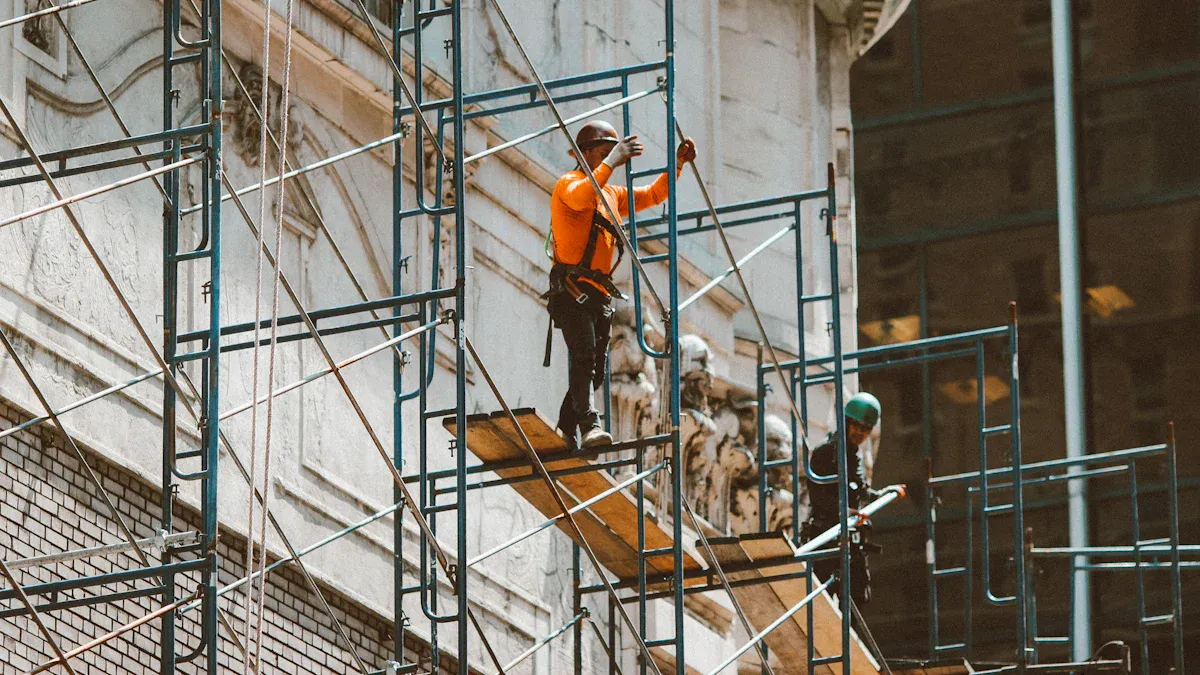
Current Requirements
OSHA Guidelines
You have to follow OSHA rules to keep your Frame Scaffolding safe and legal. These rules help stop accidents and keep workers from getting hurt. Here are the main OSHA rules for 2026: Scaffolds must hold their own weight plus four times the heaviest load they will carry. A trained person must design and build the Frame Scaffolding system. Platforms need to be fully covered and at least 18 inches wide. Workers need fall protection if they work more than 10 feet above the ground. Safe ways to get on and off platforms must be there if they are more than 2 feet up or down from where you start.
Tip: Always ask your Frame Scaffolding maker for the newest OSHA-approved parts and designs.
ANSI Standards
You should know the ANSI rules for your Frame Scaffolding system. These rules help you pick the right gear and keep your job site safe. Here is a table with the main ANSI rules for 2026:
ANSI Standard | Description |
|---|---|
ANSI/SIA A92.2-1990 | Vehicle-Mounted Elevating and Rotating Aerial Devices |
ANSI/SIA A92.3-1990 | Manually Propelled Elevating Aerial Platforms |
ANSI/SIA A92.5-1990 | Boom Supported Elevating Work Platforms |
ANSI/SIA A92.6-1990 | Self-Propelled Elevating Work Platforms |
ANSI/SIA A92.7-1990 | Airline Ground Support Vehicle-Mounted Vertical Lift Devices |
ANSI/SIA A92.8-1993 | Vehicle-Mounted Bridge Inspection and Maintenance Devices |
ANSI/SIA A92.9-1993 | Mast-Climbing Work Platforms |
Note: Ask your Frame Scaffolding maker about ANSI-approved products for your job.
New Regulations
Certification Updates
You need to know about new certification updates for Frame Scaffolding systems. The latest rules say all systems must pass tougher tests and have safer platforms. Here is a table with the newest updates:
Evidence Type | Details |
|---|---|
Compliance Requirements | All Frame Scaffolding must pass load tests and have non-slip platforms now. |
Safety Statistics | Falls cause about 35% of deaths in construction, so safer scaffolding is very important. |
Impact on Equipment Choices | Builders must use certified Frame Scaffolding to meet the new rules. |
Alert: Always use certified gear from a trusted Frame Scaffolding maker.
Compliance Measures
You need to follow new rules to avoid fines and keep your team safe. These rules include checking your scaffolding often, giving new training, and only using certified Frame Scaffolding. Write down every check and update your gear when the rules change.
Compliance Tips
Documentation
You must keep good records for every Frame Scaffolding system you use. Pick someone who knows what to do to write down checks before each work shift. Keep these records in a place where you can find them fast if an inspector comes.
Training
You have to teach your team the newest safety rules and how to use Frame Scaffolding the right way. Here are the best tips for following the rules in 2026: Check fall protection gear every day and show your team how to use it. Look at planks for damage or wear each day and change any that are not safe. Build scaffolds on flat, strong ground and use the right base, ties, and braces. Use OSHA-approved ways to get up and down, not homemade ladders. Write down checks before every shift and keep the records easy to find.
Tip: Training your team and keeping records helps you follow the rules and keeps your job site safe.
5. Choosing and Using Frame Scaffolding
Selection Guide
Project Needs
You need to pick the right scaffolding for your job. Think about these things before you choose:
What kind of project is it? Check the size and height. A small house fix is not the same as a tall office job.
How high do you need to go? Use basic frames for short jobs. Pick special scaffolds for tall buildings.
Are there tricky spots? Look for corners or curves that need special frames.
Load Requirements
You must know how much weight the scaffolding will hold. This keeps everyone safe and helps your project go well.
Light-duty scaffolding is good for painting or small repairs.
Medium-duty scaffolding works for brick work or medium loads.
Heavy-duty scaffolding is best for big jobs with lots of workers and heavy tools.
Site Conditions
Check your work area before you start building. Look for these things:
Is the ground flat and strong? Make sure it is safe.
What is the weather like? Rain or wind means you need to be extra careful.
Is there enough space? Small areas may need narrow frames.
Installation Steps
Preparing the Base
Start with a strong and flat base. Level the ground and use base plates if you need them. This stops the scaffolding from tipping or sinking.
Assembly Process
Follow these steps to build your scaffolding safely:
Build the base frame and put on cross braces.
Stack more frames on top and add more braces.
Put platforms at the right height. Add guardrails and toe boards.
Check each level to make sure it is safe.
Common Mistakes
Here is a table of mistakes people make and how to stop them:
Common Mistake | Prevention Strategy |
|---|---|
Not checking the site | Look at the ground, weather, and weight before building. |
Wrong weight guess | Figure out how much weight you need. |
Picking the wrong type | Choose the right scaffolding for your job. |
Using bad or broken parts | Only use safe, good pieces. |
Building it wrong | Follow all the steps to put it together. |
Not using trained workers | Have skilled people set it up. |
Not reading the instructions | Always follow the directions. |
Not bracing or anchoring right | Make sure all braces and anchors are tight. |
Forgetting safety parts | Add guardrails, toe boards, and safe ways to climb. |
Tip: Always check your Frame Scaffolding before you use it and after you build it.
Dismantling and Maintenance
Safe Disassembly
Take down the scaffolding by doing the steps backwards. Wear your safety gear. Keep people away from below so no one gets hurt by falling pieces.
Routine Checks
Look at your scaffolding every day before you start work. Check for broken parts, loose pieces, or missing safety items. Daily checks help you find problems before someone gets hurt.
Maintenance Schedule
Keep your scaffolding in good shape:
Clean all the parts after you use them to stop rust.
Store frames in a dry place with a roof.
Oil moving parts and look for bends or cracks.
Change out broken frames or braces right away.
Note: Checking and caring for your Frame Scaffolding often keeps it safe and helps it last longer.
Frame Scaffolding helps keep your building site safe and fast in 2026.
You must follow new safety rules like OSHA, EN 12811, and ANSI.
Pick, build, and take care of your scaffolding using good steps.
Ask experts or trusted sources for help with hard projects.
Learn about new changes and tools in the building industry.
Aspect | How It Helps Safety and Speed |
|---|---|
Stability | Lowers the chance of accidents |
Easy Assembly | Makes work go faster |
Compliance | Keeps the site safer for everyone |
Technology | Makes safety and speed better |
FAQ
What is a Frame Scaffolding system?
A Frame Scaffolding system uses frames and braces made from steel or aluminum. It helps workers and holds materials up high. You can put it together and take it apart fast. Many building sites use this system because it is safe and helps work go faster.
How do you choose the right Frame Scaffolding manufacturer?
Check if the manufacturer has the right certificates and makes good products. Look at their safety record and ask for people you can talk to about their work. Read about their warranty. Good manufacturers give strong help and clear directions.
Can you use Frame Scaffolding indoors?
Yes, you can use Frame Scaffolding inside buildings. Single frames fit in small spaces. You can move and set them up easily. Always check if the floor is strong enough and follow all safety rules.
What safety features should you look for?
Look for guardrails, toe boards, and platforms that do not slip. A good manufacturer will include these safety parts. Always check every part before you use it and follow OSHA and ANSI rules.
How often should you inspect your Frame Scaffolding system?
You should check your Frame Scaffolding system every day. Look for loose or broken parts and missing safety pieces. Daily checks help stop accidents and keep everyone safe.
What are the main benefits of using a Frame Scaffolding system?
You can build it fast and it gives strong support. The design lets you change it for different jobs. You save money on workers and materials. A good manufacturer makes products that last a long time.
How do you maintain your Frame Scaffolding system?
Clean all the parts after you use them. Store frames in a dry place. Oil the moving parts and change any broken pieces. Taking care of your Frame Scaffolding keeps it safe and helps it last longer.
Can you reuse Frame Scaffolding components for different projects?
Yes, you can use most parts again. The modular design lets you change the Frame Scaffolding for new jobs. Always check each part for damage before you use it again.